- Surmount Markets
- Posts
- Why Bitcoin Fails as a Safe Haven—and How to Trade It Wisely
Why Bitcoin Fails as a Safe Haven—and How to Trade It Wisely
Bitcoin is volatile and reacts to headlines. Learn why it’s a high-beta asset and how to approach it strategically instead of chasing every spike.

Logan Weaver
February 23, 2026
In partnership with


Earlier on Friday, as the Supreme Court announced its decision striking down President Trump's tariff regime, Bitcoin saw a brief 2% pop above $68,000. Within minutes, however, selling pressure returned, pushing BTC back below $67,000, underscoring the persistent volatility and sensitivity of crypto to short-term news.

This sudden spike in Bitcoin’s price, as fleeting as it was, comes against a rough phase for the cryptocurrency, which has shed about 45% of its value from its $124,000 highs of October 2025.
Increasingly, it is becoming evident that Bitcoin reacts sharply to headlines, but these moves rarely sustain themselves. Unlike traditional safe-haven assets, which often hold or gain value during periods of uncertainty, crypto remains highly news-sensitive and sentiment-driven. A Supreme Court decision, a regulatory tweak, or even a major company announcement can trigger a sudden spike—or crash—but the underlying volatility persists.
As such, the nature of the asset has profound implications for those seeking to include it in their investment portfolios.
Meet America’s Newest $1B Unicorn

A US startup just hit a $1 billion private valuation, joining billion-dollar private companies like SpaceX, OpenAI, and ByteDance. Unlike those other unicorns, you can invest.
Over 40,000 people already have. So have industry giants like General Motors and POSCO.
Why all the interest? EnergyX’s patented tech can recover up to 3X more lithium than traditional methods. That's a big deal, as demand for lithium is expected to 5X current production levels by 2040. Today, they’re moving toward commercial production, tapping into 100,000+ acres of lithium deposits in Chile, a potential $1.1B annual revenue opportunity at projected market prices.
Right now, you can invest at this pivotal growth stage for $11/share. But only through February 26. Become an early-stage EnergyX shareholder before the deadline.
This is a paid advertisement for EnergyX Regulation A offering. Please read the offering circular at invest.energyx.com. Under Regulation A, a company may change its share price by up to 20% without requalifying the offering with the Securities and Exchange Commission.
Safe Haven vs. Speculative Asset: What the Price Action Actually Reveals
In the financial world, a "Safe Haven" is defined by its behavior during the storm, not the sunshine. It is an asset that is expected to retain or increase its value during times of market turbulence. Historically, gold has occupied this throne.
However, the "Digital Gold" narrative often hits a wall when confronted with raw price action. While Bitcoin shares gold’s scarcity, its behavior during stress periods reveals a completely different DNA: that of a high-beta speculative risk asset
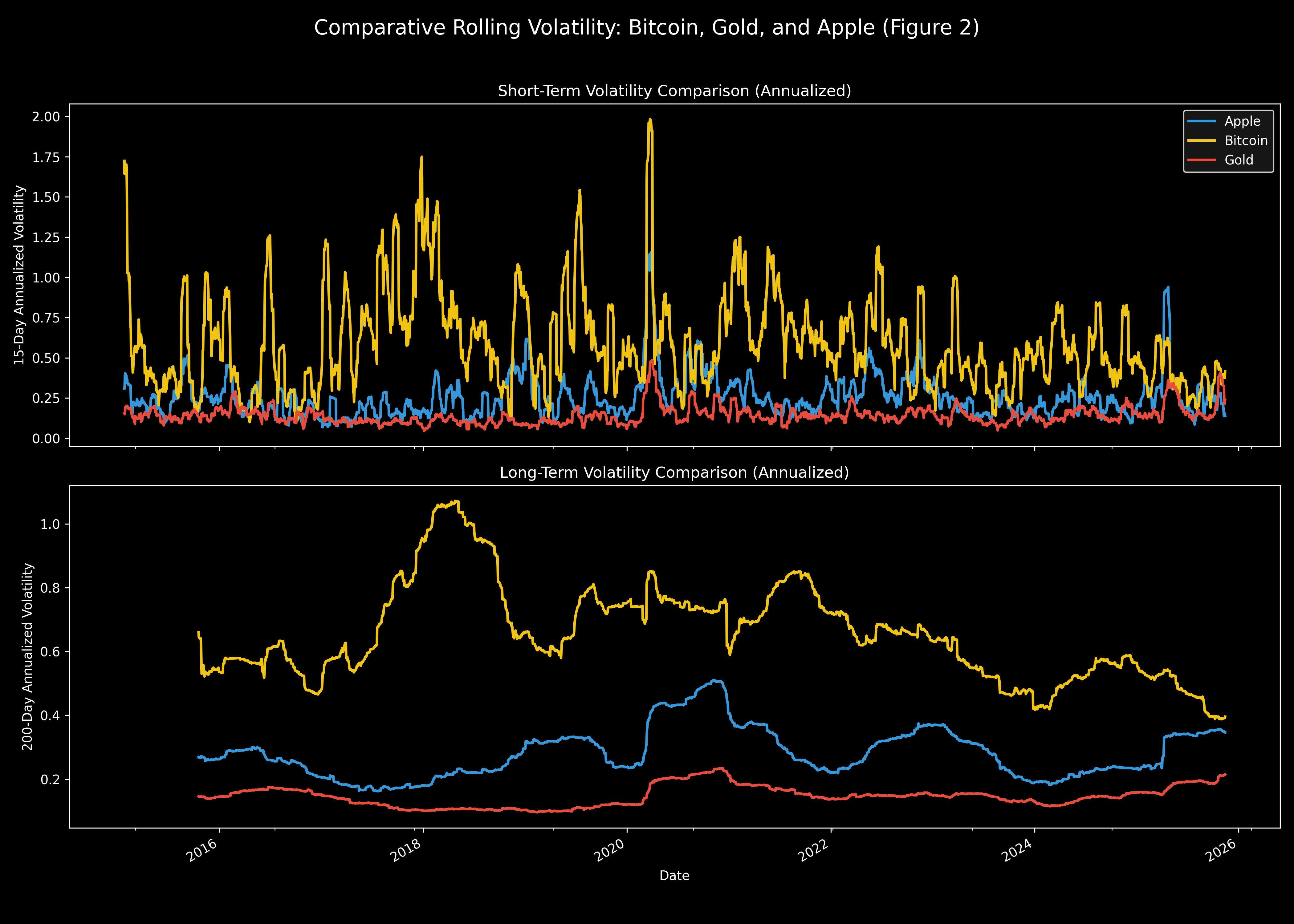
A true defensive asset provides a "negative correlation" to equities during a crash. When the S&P 500 plunges, gold often stays flat or ticks upward as investors seek a "flight to quality."
Bitcoin, by contrast, has historically buckled under the same pressure.
The Drawdown Gap: During the 2022 tightening cycle, while the S&P 500 entered a bear market with a ~25% decline, Bitcoin saw a peak-to-trough drawdown exceeding 75%.
Liquidity Sensitivity: Bitcoin does not move based on "safety"; it moves based on liquidity. When the Federal Reserve tightens the money supply, Bitcoin’s price action mirrors the most speculative corners of the market rather than the stabilizing force of bullion.
Similarly, another piece of evidence that strongly works against the idea of Bitcoin being a “safe haven” asset is the cryptocurrency’s tightening correlation with the Nasdaq 100.

As such, instead of hedging against a tech sell-off, Bitcoin acts as an amplified version of tech. If the Nasdaq is down 2%, Bitcoin is often down 5%. A safe haven shouldn't be the first thing investors sell to cover their margins in other trades.
Taking this example to the extreme leads to cases such as that of Microstrategy (MSTR), which has essentially created a "volatility trap", by using leverage to procure large quantities of Bitcoin. So whenever Bitcoin faces a price drops, the downward pressure is amplified by the company's debt obligations and the market's fear of forced liquidations.
Bitcoin Fueled by Risk Appetite Surges
While a safe-haven asset should ideally be the "emergency brake" for a portfolio, Bitcoin functions more like a nitrous boost. Its value is fundamentally tethered to the market's "risk appetite"—the willingness of investors to chase high returns in exchange for high uncertainty.
When risk appetite is high, Bitcoin thrives; when it vanishes, Bitcoin is often among the first assets to be liquidated. Here is how that link manifests in the market:
1. The "First Out, Last In" Dynamic
In professional portfolio management, assets are often tiered by their risk profile. During a risk-off event (like the sharp volatility we've seen in early 2026), investors don't just sell what they dislike; they sell what is easiest to move and what carries the most "beta" (volatility).
The Liquidity Vacuum: Because Bitcoin is highly liquid and trades 24/7, it often serves as a "collateral piggy bank." Investors sell Bitcoin to cover margin calls on their equity positions.
The Anti-Safe Haven Signal: A safe haven like Gold or U.S. Treasuries usually sees inflows during these moments. Bitcoin, conversely, has shown a consistent pattern of front-running the exit, dropping before or alongside speculative tech stocks.
2. Sensitivity to the "Cost of Money"
Risk appetite is largely a function of interest rates. When money is "cheap" (low rates), investors are forced out of safe bonds and into "risk-on" assets to find yield.
Bitcoin as a Liquidity Proxy: Bitcoin’s price action is almost perfectly synced with global liquidity cycles. It doesn't rally because the world is dangerous; it rallies because the world is flush with cash.

Finally, unlike gold, which is largely held in physical form or unleveraged ETFs, the Bitcoin market is saturated with derivatives and leverage.
This leads to an amplified appetite. As such when traders feel "greedy," they use leverage to bet on Bitcoin, driving the price up exponentially faster than traditional assets. Given these dynamics, when the mood shifts to "fear," these leveraged positions are forcibly closed (liquidated). This creates a "waterfall" effect where Bitcoin's price collapses far more violently than the underlying macro trigger would suggest.
Strategy in Focus: Bitcoin Momentum Follower
While Bitcoin remains a speculative risk asset at its core, there are robust quantitative frameworks that allow investors to navigate its volatility without being consumed by it. A systematic trend-following approach fundamentally shifts the investor’s role from a "hopeful observer" to an "active risk manager."
With Surmount’s Bitcoin Momentum Follower Strategy, this theoretical framework is translated into a practical, automated engine. Here is how it specifically addresses the limitations of Bitcoin as a standalone asset:

1. Hard-Coded Discipline
The strategy removes the "human element" that often leads to disaster in crypto. Instead of debating whether a 10% drop is a "dip to buy" or the "start of a crash," the algorithm follows pre-defined trend indicators—such as moving-average crossovers or rate-of-change thresholds. If the momentum disappears, the strategy exits. Period.
2. Built-in "Crash Protection"
Surmount’s approach is designed to participate in the "parabolic" upside of Bitcoin while aggressively seeking to mitigate the catastrophic 70%+ drawdowns that define crypto bear markets.
The Mechanism: By focusing on sustained upward momentum, the strategy effectively "steps aside" during periods of liquidity tightening or high-volatility "choppiness" where Bitcoin's correlation with the Nasdaq is at its highest and most dangerous.
The Performance Profile: Historically, similar systematic models on Surmount have aimed for significant double-digit annual returns (often targeting the 25%–30% range) while maintaining much shallower maximum drawdowns compared to a simple "HODL" approach.
3. Turning Volatility into an Opportunity
In a standard portfolio, Bitcoin's volatility is a liability. In a momentum-following strategy, volatility is the fuel.
Because Bitcoin trends more strongly and persistently than almost any other asset class, a systematic follower can capture the "meat" of a multi-month rally while avoiding the "exhaustion" phase at the top.
This creates a convex return profile: you aim for the high-upside "fat tails" of the market while using quantitative filters to cut the "downside tails" short.
A trend-following strategy (e.g., exiting when the price falls below the 200-day Moving Average) essentially automates the "risk-off" decision.
The Result: Instead of riding a 75% drawdown while waiting for the "safe haven" narrative to come true, the strategy forces an exit during the early stages of a liquidity tightening cycle. It effectively converts Bitcoin’s extreme volatility into a series of smaller, managed "stop-outs," preserving capital for the next bull cycle
You don’t need Bitcoin to be a "Safe Haven" if your strategy provides the safety for you. By treating Bitcoin as the speculative, momentum-driven engine it actually is, Surmount allows you to harness its power while keeping your hand firmly on the brake.
— Surmount Markets Team